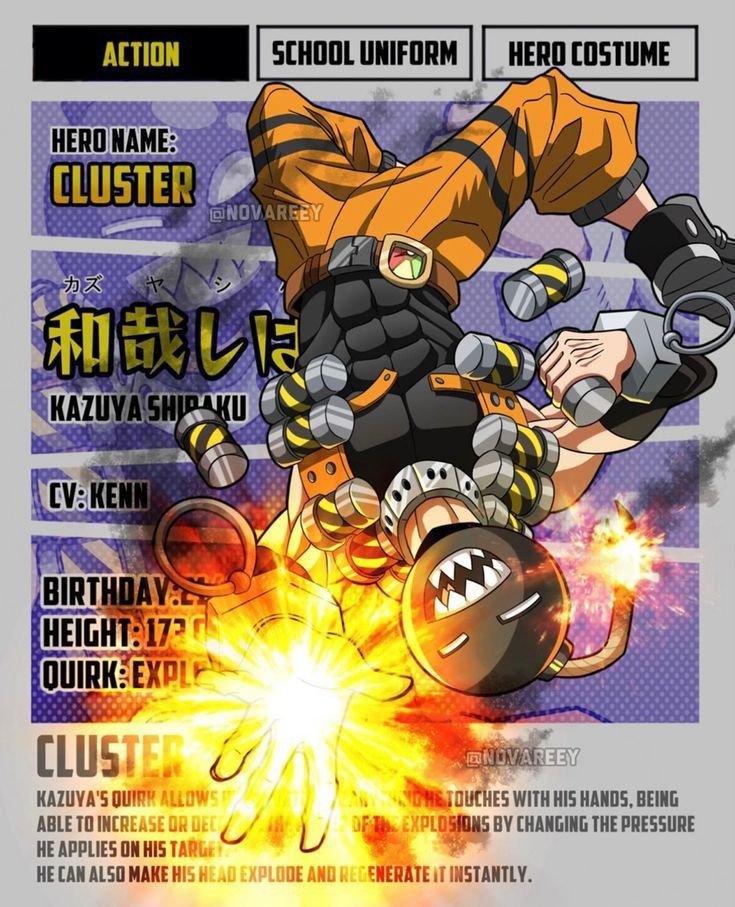
Ever dreamt of crafting your own hero or villain for the vibrant, Quirk-filled world of My Hero Academia? You’re not alone. The sheer creativity sparked by MHA’s universe makes it a perfect playground for fanfiction, RPGs, and original stories. But building a compelling character isn't just about a flashy superpower; it's about going Beyond Quirks: MHA Character Generator Elements to forge a truly unforgettable individual. This guide will walk you through not just generating powers, but also the essential ingredients that make a character breathe, fight, and inspire.
Whether you're looking to populate your next fanfiction epic, find an antagonist for your tabletop campaign, or simply flex your creative muscles, understanding the interplay between a character's powers and their personhood is key. Let's dive into how to leverage powerful tools and smart design principles to bring your MHA OC (Original Character) to life.
At a Glance: Crafting Your MHA Masterpiece
- Beyond Just Powers: Learn to integrate Quirks with personality, backstory, and visual design for deep characters.
- Understanding Quirk Types: Discover the nuances of Emitter, Transformation, and Mutant Quirks and their storytelling potential.
- Leveraging the Generator: Master how to use a My Hero Academia Quirk Generator to kickstart your creative process and explore endless power combinations.
- The Art of Refinement: Turn a raw generated Quirk into a unique, plot-driving ability with tailored drawbacks and enhancements.
- Avoiding Common Pitfalls: Design characters that feel authentic, balanced, and engaging, steering clear of one-dimensional tropes.
- Your Character's Journey: Develop compelling motivations, relationships, and growth arcs that make your hero truly heroic (or villainous).
More Than Just a Power: The Heart of MHA Character Creation
In the world of My Hero Academia, a staggering 80% of the population possesses a "Quirk"—a unique superpower ranging from the subtle to the earth-shattering. This pervasive phenomenon isn't just a plot device; it's a fundamental aspect of identity, society, and destiny. Your Quirk can define your career path, your social standing, and even your physical appearance. But here's the crucial insight: a powerful Quirk alone doesn't make a compelling character.
Think about All Might, the Symbol of Peace. His strength is immense, but it's his unwavering spirit, his self-sacrifice, and his mentor-student bond with Deku that truly defines him. Similarly, Shoto Todoroki's Half-Cold Half-Hot Quirk is impressive, but his struggle with his past and his journey to define his own heroism make him resonate with audiences.
The best characters are a rich tapestry of interwoven elements: their power, their personality, their past, and their place in the world. When you start building an MHA character, you’re not just choosing a cool ability; you’re sketching out a life.
The Blueprint: Understanding MHA's Core Character Elements
Before we dive into the mechanics of generating Quirks, let’s lay out the foundational elements that combine to create a truly unique MHA character. Each piece influences the others, building a cohesive and believable individual.
Quirks: The Foundation (But Not the Ceiling)
Your character's Quirk is often the first thing people notice, but it's vital to see it as a springboard, not the entire ocean. The MHA universe categorizes Quirks into three primary types, each with its own characteristics and narrative potential:
- Emitter Quirks: These are the most common and versatile. Users can emit or generate certain substances or manipulate existing elements. Think Bakugo's Explosion, Uraraka's Zero Gravity, or Todoroki's Half-Cold Half-Hot.
- Storytelling Potential: Emitter Quirks often come with external effects, making them visually dynamic in battles. Their drawbacks might involve resource depletion (e.g., energy, specific body fluids) or range limitations.
- Transformation Quirks: Users temporarily alter their own body in some way. Kirishima's Hardening, or Toga's Transform are prime examples. These abilities are often physical boosts or tactical changes.
- Storytelling Potential: Transformation Quirks are fantastic for characters who undergo visible changes, offering strong visual cues for their power output. Drawbacks often involve physical strain, time limits, or loss of control over the transformation.
- Mutant Quirks: These Quirks grant the user permanent, often physical, modifications to their body that are always active. Shoji's Dupli-Arms or Tsuyu's Frog Quirk fall into this category.
- Storytelling Potential: Mutant Quirks are excellent for exploring themes of acceptance, discrimination, and self-identity, as they visibly set the user apart. Their drawbacks are often inherent physical limitations or unique vulnerabilities related to their permanent mutation.
Beyond type, Quirks also vary in power level: - Weak: These Quirks might seem minor or situational, requiring immense creativity, skill, or support items to be effective. Don't underestimate them—a "weak" Quirk can make for the most compelling underdog story.
- Medium: Balanced and versatile, these Quirks offer a good range of abilities without being overwhelmingly powerful. They're often the most common type found among professional heroes and villains.
- Strong: These Quirks boast significant destructive power, unique utility, or overwhelming defensive capabilities. They tend to be more rare and often come with equally significant drawbacks or personal burdens.
This is where a tool like the My Hero Academia Quirk Generator truly shines. It allows you to select these parameters—Quirk type, desired power level, and even keywords to influence abilities—to instantly generate a detailed Quirk name, description, and potential drawbacks. It's an instant burst of inspiration that saves you hours of brainstorming, providing a concrete foundation for your character's abilities.
Personality: The Hero's Inner World
A Quirk is what a character can do, but their personality defines who they are and why they do it. Without a distinct personality, even the coolest Quirk feels hollow.
- Motivation: Why does your character become a hero, a villain, or simply navigate the world? Is it for fame, justice, revenge, survival, or something else entirely? A clear motivation drives their actions.
- Strengths & Flaws: No one is perfect. A character's strengths (bravery, intelligence, empathy) make them admirable, while their flaws (arrogance, impulsiveness, insecurity) make them relatable and create opportunities for growth.
- Moral Compass: Where does your character stand on right and wrong? Are they strictly lawful, pragmatic, chaotic, or morally ambiguous? This dictates their choices in high-stakes situations.
- Quirk-Personality Connection: How does their Quirk influence their personality, and vice-versa? A loud, explosive Quirk might perfectly match an impulsive personality (Bakugo), or it could be a stark contrast, used by someone quiet and reserved. A physically demanding Quirk might breed resilience, while a powerful, destructive one might lead to arrogance or self-doubt.
Backstory: Weaving the Tapestry of Life
Every character comes from somewhere. Their past experiences shape their present identity and future goals.
- Quirk Origin: How did they get their Quirk? Was it inherited, a sudden mutation, or a result of a traumatic event? This can be a source of pride, shame, or mystery.
- Key Life Events: What moments shaped them? A childhood accident, a specific mentor, a loss, a moment of triumph—these all leave indelible marks.
- Family, Friends, & Rivals: The people in their life profoundly impact who they become. A supportive family, a childhood rival, a guiding mentor, or a traumatic encounter with a villain can define their path.
- Impact on Goals: How does their backstory inform their current aspirations? Did a past injustice ignite a desire for justice, or did a personal failure fuel a relentless drive for redemption?
Appearance & Style: Visual Storytelling
Before your character even speaks, their appearance tells a story. This isn't just about looking cool; it's about communicating aspects of their personality and Quirk.
- Hero/Villain Costume: Is it practical, flashy, intimidating, or minimalist? Does it incorporate elements of their Quirk? Think of Eraser Head's scarf for capturing or Hawks' wings for flight.
- Physical Traits: Beyond the costume, do they have unique physical characteristics linked to their Quirk (Mutant types, or scars from Emitter/Transformation use)? Or do their traits simply reflect their personality (e.g., a perpetually tired look for a workaholic hero)?
- Accessories & Gear: Do they use support items? These can compensate for Quirk weaknesses, enhance abilities, or simply reflect their personal style.
Relationships: The Social Fabric
No hero or villain exists in a vacuum. Their interactions with others reveal dimensions of their character that might otherwise remain hidden.
- Mentors & Teammates: How do they learn and grow through others? What role do they play in a team?
- Rivals & Villains: Who challenges their beliefs or abilities? These conflicts aren't just physical; they're ideological and personal.
- Civilians & Public Perception: How do ordinary people see them? Do they inspire hope, fear, or skepticism?
By thoughtfully considering these elements, you begin to see how a simple Quirk generation can evolve into a complex, engaging character.
Mastering the Generator: From Idea to Incarnation
The beauty of a My Hero Academia Quirk Generator lies in its ability to jumpstart your creativity, whether you have a clear vision or want to be surprised. Let’s break down how to best utilize this powerful tool.
Step 1: Setting Your Intentions (or Embracing Chaos)
You have a few ways to approach Quirk generation, each yielding different results:
- Targeted Generation: If you have a specific character concept in mind—say, a stealthy hero or a fire-based villain—you can guide the generator.
- Quirk Type: Choose Emitter for ranged attacks or elemental control, Transformation for physical boosts or temporary changes, or Mutant for inherent, always-on physical traits.
- Power Level: "Weak" for an underdog story, "Medium" for a balanced, versatile character, or "Strong" for a character with significant potential or challenges.
- Keywords: This is where you can be most specific. Input terms like "fire," "ice," "speed," "gravity," "absorb," "create," "teleport," "animal," "light," "sound," etc. The more specific, the more tailored the Quirk will be. For instance, "fire control" is more precise than just "fire."
- Embracing Randomness: Sometimes, the best ideas come from unexpected places. If you leave all the fields blank, the generator produces a truly random Quirk.
- The Magic of Surprise: This approach can force you out of your comfort zone and present you with unique challenges. A randomly generated Quirk like "Flesh Sculpt" (Mutant, Medium) or "Kinetic Burst" (Emitter, Strong) might inspire a character concept you'd never considered. It's an excellent way to break through writer's block or explore truly novel combinations.
Step 2: Decoding Your Generated Quirk
Once you click 'Generate Quirk,' you'll receive three crucial pieces of information:
- Quirk Name: This is often evocative and hints at the ability. "Gale Force," "Steel Skin," "Echo Step"—these names immediately give you a sense of the power.
- Detailed Description: This is the core of your Quirk, explaining its mechanics, typical uses, and how it manifests. It might describe how a "Telekinetic Push" allows the user to exert force with their mind, but only on objects within a 10-meter radius.
- Potential Drawbacks: Crucially, MHA Quirks almost always come with limitations or costs. These might be physical exhaustion, mental strain, specific environmental requirements, or a time limit. For "Telekinetic Push," the drawback could be severe migraines after prolonged use or a limit on the weight they can push.
Consider a generated Quirk:
Name: "Vibration Pulse"
Type: Emitter
Power Level: Medium
Description: The user can generate powerful sonic vibrations from their hands and feet, capable of disrupting solid objects, creating shockwaves, or disorienting opponents.
Drawbacks: Prolonged use can cause severe muscle fatigue and a temporary ringing in the user's ears, making them vulnerable to sound-based attacks.
This output isn't just a power; it's a narrative prompt. The drawbacks alone suggest a path for character development: how does the hero train to mitigate fatigue? How do they protect their ears? What strategies do they employ to avoid sound-based counters?
Step 3: Beyond the Baseline – Tweaking and Tailoring
The generated Quirk is a fantastic starting point, but it's rarely the final word. This is where your creativity takes over, making the Quirk truly yours.
- Adjust the Name: Does "Vibration Pulse" sound right? Maybe it's "Resonance Rumble" or "Tremor Fist." Tweak it to better fit your character's personality or the Quirk's specific nuances.
- Add Nuance to Abilities: The description is a general guideline. You can elaborate:
- Can "Vibration Pulse" be used subtly, like to detect hidden objects by feeling vibrations?
- Can it be focused to create a single, powerful shockwave, or is it always a broad pulse?
- Does the user need to touch an object to transmit vibrations, or can it be an area-of-effect?
- Embrace or Mitigate Drawbacks: The drawbacks are gold for storytelling.
- Does your hero train relentlessly to overcome the muscle fatigue, perhaps by developing incredible physical endurance?
- Do they wear specialized ear protection, turning a weakness into a tactical choice?
- Could the temporary ringing be a unique sensory input, allowing them to 'see' through vibrations in a limited way?
- Connect to Personality and Backstory: This is the critical step that transforms a generated power into a character-defining trait.
- Personality: Is the user of "Vibration Pulse" boisterous and prone to collateral damage, or precise and controlled? Perhaps they're quiet and reserved, making their powerful Quirk a surprising contrast.
- Backstory: Did they accidentally destroy something important with an uncontrolled pulse as a child, leading to a fear of their own power? Did they develop enhanced hearing because of their Quirk, making them sensitive to others' emotions?
By taking these steps, your randomly generated "Vibration Pulse" character isn't just someone with a cool power; they're a hero defined by their struggles, their choices, and their growth.
The Art of Integration: Making Quirks Feel Natural
A Quirk is most compelling when it feels like an organic part of the character and the world, not just an add-on.
Quirk Drawbacks as Story Gold
Drawbacks aren't just limitations; they are catalysts for character development.
- Physical Strain: Overuse leading to injury, exhaustion, or temporary debilitation (e.g., Deku's broken bones). This forces strategic thinking and self-control.
- Mental Toll: Quirks that cause confusion, memory loss, or psychological distress (e.g., Kurogiri's warp gate causing brain damage in its user, or the mental strain of some mind-control Quirks). This opens doors for internal struggles and coping mechanisms.
- Social Stigma/Impact: Mutant Quirks, especially those that are visually unusual or potentially destructive, can lead to prejudice or social isolation. This pushes characters to find their place and advocate for themselves.
- Environmental Needs: A water-based Quirk might be weaker in arid environments, or a fire Quirk might consume ambient oxygen. These create tactical challenges.
Consider the "Vibration Pulse" user. Their muscle fatigue drawback forces them to manage their energy in fights. Perhaps they develop a fighting style that relies on quick, decisive bursts rather than prolonged engagements, making them a strategic planner rather than a brute-force attacker. This drawback shapes their entire combat philosophy.
Synergy and Conflict: Quirk Interaction
No hero fights alone, and no villain operates in a vacuum. How Quirks interact with others is crucial for dynamic storytelling.
- Team Synergy: How does your character's Quirk complement their teammates'? A defensive Quirk can protect an offensive one. A mobility Quirk can set up others.
- Example: "Vibration Pulse" could be used to disorient enemies, allowing a melee fighter to close in, or to shatter debris, clearing a path for a speedster.
- Opponent Counterplay: What Quirks are strong against yours? What are your weaknesses? A character with a "Silence" Quirk would be a devastating counter to "Vibration Pulse." Knowing this creates tension and forces innovative problem-solving.
Evolution and Awakening: Growing with Your Quirk
Quirks aren't static. Heroes and villains alike can train, refine, and even "awaken" new facets of their powers.
- Training: Deliberate practice, developing new applications, enhancing control, or extending limits.
- Ultimate Moves: Signature techniques that showcase mastery and creativity.
- Quirk Awakening: A sudden, often dramatic, power-up that unlocks a previously dormant aspect or significantly enhances existing abilities, usually triggered by extreme stress or emotion. This is a powerful narrative device for character growth.
Your "Vibration Pulse" hero might initially only be able to emit wide, unfocused pulses. Through training, they learn to focus vibrations into precise cutting waves, or to generate a localized 'vibration shield.' An awakening might allow them to sense vibrations through the ground over vast distances, giving them unparalleled situational awareness.
Common Pitfalls and How to Dodge Them
Crafting MHA characters is fun, but some common traps can make them feel less authentic or engaging.
- The Overpowered Quirk (Without Consequences): A Quirk that can do everything with no drawbacks is boring. It removes tension and makes the character unrelating.
- Solution: Lean into the drawbacks generated by the tool, or invent new ones. Every power needs a price, whether it's physical, mental, or ethical.
- One-Dimensional Personalities: A hero who is only brave, or a villain who is only evil, lacks depth.
- Solution: Give your characters strengths and flaws. Explore their internal conflicts. What are their insecurities? What makes them laugh? What are their hidden fears?
- Lack of Internal Consistency: If your character's actions or Quirk abilities contradict established rules or their own personality without explanation, it breaks immersion.
- Solution: Establish clear rules for your Quirk. Stick to your character's core motivations. If a character makes a surprising choice, ensure there's a compelling reason rooted in their development.
- Ignoring the "Human" in "Superhuman": MHA excels because its characters, despite their powers, are deeply human. They experience fear, doubt, love, and growth.
- Solution: Focus on the character's emotional journey. How do their powers affect their relationships? Their dreams? Their understanding of justice?
Case Study Snippets: Realizing the Potential
Let's look at how these elements come together:
Case Study 1: The "Weak" Quirk, Strong Hero
- Generated Quirk: "Dust Devil" (Emitter, Weak). User can create small, localized gusts of wind, primarily useful for kicking up dust or creating minor breezes.
- Beyond Quirks:
- Personality: Analytical, observant, a bit socially awkward but incredibly determined.
- Backstory: Was bullied for her "useless" Quirk, leading to a deep-seated desire to prove her worth and protect those overlooked. She meticulously studied wind currents and air pressure.
- Development: Through relentless training and strategic thinking, she discovered she could focus her "Dust Devil" into high-velocity micro-bursts to disrupt enemy balance, create temporary smokescreens, or subtly manipulate small objects. She uses her Quirk not for brute force, but for precision and tactical advantage, often working in tandem with more powerful teammates to set up their attacks. Her ultimate move involves creating a dense, localized 'sandstorm' by combining her gusts with environmental dust, disorienting multiple opponents.
Case Study 2: The "Overpowered" Quirk with Hidden Costs - Generated Quirk: "Chrono Burst" (Emitter, Strong). User can briefly accelerate the local flow of time around an object or person, aging them rapidly or decaying objects into dust.
- Beyond Quirks:
- Personality: Arrogant and aloof, but secretly deeply fearful of their own power. Believes in absolute justice and acts as judge, jury, and executioner.
- Backstory: Discovered their Quirk accidentally, aging their beloved pet to dust in a fit of childhood anger. This trauma instilled a profound self-loathing and a fear of losing control, which they mask with a cold exterior and a rigid moral code.
- Development: The Quirk's drawback is severe: each use rapidly ages the user's own body by a proportional amount, making them appear older with every powerful attack. They are constantly battling against their own mortality, relying on precise, minimal uses to preserve their lifespan. This leads to a tragic hero/anti-villain who seeks to achieve their goals quickly, knowing their time is limited, or a villain desperate to find a cure, even if it means sacrificing others. Their aging appearance becomes a constant visual reminder of their power's terrible cost.
Your Heroic Journey Begins: Next Steps in Character Design
You now have a solid framework for creating MHA characters that are truly unique, thanks to the insights on Beyond Quirks: MHA Character Generator Elements. The process is iterative, fun, and deeply rewarding.
- Start Generating: Head over to a My Hero Academia Quirk Generator and play around. Try both targeted and random generation to see what sparks your imagination. Don't be afraid to generate multiple Quirks until you find one that truly resonates.
- Flesh Out the Basics: Once you have a Quirk, begin asking yourself the critical questions: What kind of person would have this Quirk? How would it affect their life? What are their core motivations?
- Build the World Around Them: Who are their friends, their family, their enemies? What kind of challenges do they face? How do they fit into the broader MHA universe?
- Iterate and Refine: Don't expect perfection on the first try. Develop your character over time, adding layers to their personality, deepening their backstory, and refining their Quirk's specific mechanics and drawbacks.
- Share and Get Feedback: Present your character to friends or online communities. Fresh perspectives can reveal strengths and weaknesses you hadn't considered.
Remember, every hero—and every compelling character—is more than the sum of their powers. They are the choices they make, the burdens they carry, and the dreams they chase. Go forth and create your next MHA legend!