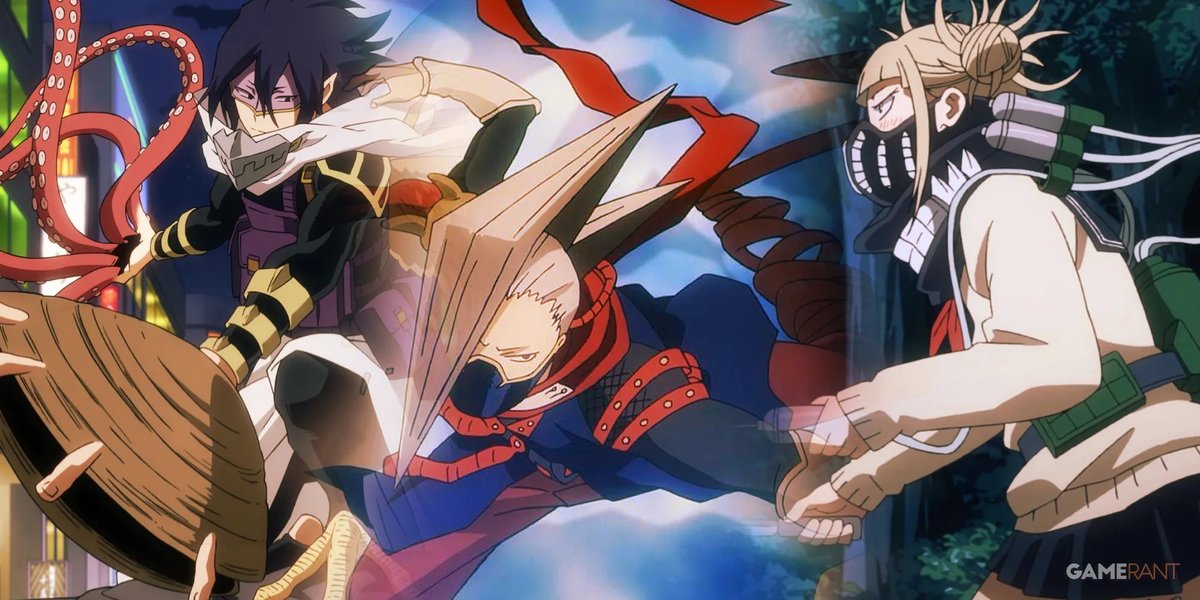
The world of My Hero Academia isn't just about explosive battles and heroics; it's a meticulously crafted universe brimming with enigmatic powers, a complex history, and a future constantly under threat. But beyond the pages of the manga and the frames of the anime, a vibrant community of fans dedicates itself to unraveling the deepest mysteries, sparking compelling Fan Theories & Lore Behind MHA Quirks. These aren't just idle musings; they're passionate, often brilliant, attempts to piece together clues, predict plot twists, and enrich our understanding of the phenomenon that transformed humanity.
From the first recorded instance of a light-radiating baby to the terrifying power of All For One, Quirks define this world. Yet, countless questions linger: How did these powers truly begin? What does it mean to be "Quirkless" in a superpowered society? And what secrets might characters be hiding about their origins or lineage? Let's dive deep into both the established lore and the most captivating fan theories that keep the MHA fandom buzzing.
At a Glance: Deciphering MHA's Quirks
- Quirks are superpowers, marking the next stage of human evolution, now possessed by 80% of the global population.
- Their origin is murky: The first recorded Quirk was "The Luminescent Baby," but the very first known user was All For One's mother.
- Quirks fall into three main types: Emitter (generates/controls), Transformation (temporary body changes), and Mutant (permanent physical traits).
- Fan theories fill in the gaps: Speculation around Dabi's true identity, the Winged Nomu, and even Izuku Midoriya's father adds layers to the narrative.
- The "Quirkless" are a vanishing minority, prompting theories that question whether true Quirklessness even exists.
- Understanding the lore enhances appreciation for the world-building and character motivations in My Hero Academia.
The DNA of Power: Understanding MHA's Quirk System
Before we jump into the thrilling world of speculation, let's ground ourselves in the established facts. Horikoshi Kohei, MHA's creator, has built a robust foundation for Quirks, making the world feel tangible, even with its fantastical elements.
What Exactly Is a Quirk? The Foundation of a Superpowered Society
At its core, a Quirk (originally termed a "Meta Ability") is a superhuman ability considered the next, albeit chaotic, stage of human evolution. Imagine waking up one day with the power to breathe fire, turn invisible, or generate explosions from your palms. That's the MHA reality.
A telling, if somewhat rudimentary, diagnostic method involves a simple pinky toe test: individuals with a single joint in their pinky toe are typically Quirk users, while those with two joints are presumed Quirkless. This anatomical difference suggests a more "streamlined" body structure in Quirk users, a subtle hint at the biological shift accompanying these powers.
A Brief History of the Extraordinary: From Chaos to Heroes
The emergence of Quirks wasn't a smooth transition. It was an explosive, terrifying upheaval that redefined society.
The earliest known instance of a human possessing a Quirk dates back to the mother of All For One and Yoichi Shigaraki, who exhibited "Spearlike Bones." However, the first officially recorded Quirk was an ability to radiate light, manifesting in a newborn in Qing Qing City, China – famously known as The Luminescent Baby. This event ignited a global phenomenon.
These nascent powers, initially dubbed "Meta Abilities," plunged the world into an era of widespread chaos, crime, and profound prejudice. Fear bred hatred, leading to the formation of "Anti-Meta" groups dedicated to the extermination of those with abilities. Tragically, The Luminescent Baby, despite gathering 10 million followers advocating for peace, was murdered by the nefarious All For One, setting a grim precedent for the power struggle to come.
It was "The Mother of Quirks" who coined the term "Quirk" to describe her son Chikara Yotsubashi's Meta Ability, a term that eventually became universally adopted. The ensuing lawlessness spurred ordinary citizens to take matters into their own hands, initiating the "Vigilantes Era." This period saw individuals like All For One exploit the chaos by transferring Quirks, ostensibly to restore order, but truly to amass loyal followers and consolidate his power.
Eventually, the "Advent of the Extraordinary" truly began when the Police Force, consciously opting not to use Quirks, paved the way for the rise of "Pro Heroes" in Rhode Island, USA. This institutionalized heroism gradually led to the disappearance of Vigilantes, establishing the heroic framework we see today.
Yet, governmental efforts to regulate Quirks weren't universally accepted. The Meta Liberation Army (MLA), led by the very Chikara Yotsubashi (known as Destro) who inspired the term "Quirk," believed that free Quirk use was a fundamental human right. After years of rebellion and ultimate defeat, Chikara penned "Meta Liberation War" in prison before taking his own life. However, his legacy and the MLA continued to operate from the shadows, proving that the struggle for Quirk freedom was far from over.
Quirk Prevalence: A World Transformed
Today, the statistics are staggering. Approximately 80% of the global population possesses a Quirk, a percentage that continues its steady ascent. Conversely, the Quirkless population is rapidly declining, now representing less than 20% of the world. This demographic shift underlines a fundamental transformation of the human species, making the rare Quirkless individual an anomaly rather than the norm.
Decoding Quirk Types: A Spectrum of Powers
While every Quirk is unique, they are broadly categorized into three primary types, each with its own characteristics and implications for its user:
- Emitter (Operative) Quirks:
- What they do: These are the most common type, allowing users to generate, control, or alter things from their bodies. Think Bakugo's Explosions, Todoroki's Half-Cold Half-Hot, or Uraraka's Zero Gravity.
- How they work: They typically require conscious effort and can vary widely in range and intensity. The user produces an effect or substance.
- The downside: Over-exertion or excessive generation can lead to physical harm or exhaustion for the user. Some Emitter-types even rely on external resources for activation; for instance, Sato requires ingesting sugar for his Sugar Rush, while Yaoyorozu's Creation needs lipids from her body.
- Transformation (Composite/Hybrid) Quirks:
- What they do: These abilities cause temporary physical alterations to the user's own body, enhancing existing features or adding new ones. Kirishima's Hardening, for example, makes his skin incredibly tough.
- How they work: They usually require conscious effort and primarily affect the user directly.
- The downside: Transformation Quirks are temporary, and over-exertion often leads to negative repercussions, like Kirishima's hardening wearing off, leaving him vulnerable. They are unique in that they bestow attributes not normally exhibited by humans and are the least common type.
- Mutant (Heteromorphic) Quirks:
- What they do: These Quirks result in permanent physical "abnormalities" that are directly tied to the user's power, like Shoji's Dupli-Arms or Tsuyu's Frog. These aren't temporary changes; they are part of the user's body from birth.
- How they work: They are constantly active and cannot be "turned off."
- The downside: While often powerful, Mutant-type Quirks can cause inconvenience or make users stand out significantly. This permanent alteration means they are partially immune to Quirk-disabling effects, as their body is the Quirk. However, users of Mutant-type Quirks (often called "heteromorphs") frequently face discrimination, leading to social movements like the Creature Rejection Clan. They are the most identifiable and commonly inherited type.
Quirk Sub-Types: The Rare & Remarkable
Beyond the main categories, a few rare sub-types exist, demonstrating the sheer versatility of Quirk evolution. Accumulation Quirks are perhaps the rarest and most unique, with only six canon examples. These Quirks gather something over time that alters or amplifies their abilities. The most famous example is One For All, which accumulates the strengths and Quirks of past users. Another is Fa Jin, which stores the user's kinetic energy. Accumulation Quirks aren't mutually exclusive with the main types; they can also fall under Emitter, Transformation, or even Mutant categories, adding another layer of complexity.
If all this talk of Quirks has you wondering what kind of power you'd possess in the MHA universe, you might enjoy exploring possibilities with a My Hero Academia Quirk Generator. It's a fun way to imagine your own place in a world defined by unique abilities.
Beyond the Canon: Diving Deep into Fan Theories
Now, for the really exciting part. The gaps in MHA's lore, the cryptic hints, and the lingering questions have spawned a thriving ecosystem of fan theories. These aren't just wild guesses; they're often meticulously constructed arguments that connect disparate plot points, character motivations, and subtle foreshadowing. They invite us to think like detectives, piecing together a larger narrative puzzle.
The Fiery Enigma: Is Dabi a Todoroki?
This is arguably one of the most pervasive and passionately debated theories in the MHA fandom, and for good reason. Dabi, the enigmatic villain with powerful cremation flames, is widely speculated to be Toya Todoroki, the eldest son of Endeavor and the presumed deceased sibling of Shoto, Natsuo, and Fuyumi.
The Evidence:
- Similar Quirks: Dabi's blue flames are incredibly potent, reminiscent of Endeavor's Hellflame and Shoto's fire side. The color blue often indicates a higher temperature.
- Physical Appearance: Dabi's distinct burns cover a significant portion of his body. While he claims they're from his Quirk's backlash, many theorize they're from an accident involving his own uncontrolled flames as a child, mirroring the early struggles of the Todoroki children.
- Motivations and Obsession: Dabi's primary motivation seems to be the destruction of hero society, specifically targeting Endeavor and his legacy. His intense hatred and knowledge of Endeavor's past family mistreatment (especially towards Shoto) suggest a deeply personal connection.
- Emotional Reactions: Whenever Endeavor is mentioned, Dabi reacts with a chilling intensity that goes beyond typical villainous disdain. His taunts often feel like personal jabs from someone who knows the family's dark history intimately.
- Lack of a Family Name: Dabi consistently refuses to reveal his true name, a stark contrast to other League of Villains members who, despite villainy, maintain some connection to their past identities. This secrecy fuels the idea that his past name carries significant weight and would expose his lineage.
If true, this theory adds an incredible layer of tragedy and complexity to the Todoroki family saga, transforming a story of redemption into one entwined with profound familial betrayal and consequence.
A Familiar Face in the Flock? The Winged Nomu Theory
This theory is more poignant and tragic than many others, suggesting a direct, horrifying link between a background character and one of MHA's most monstrous creations. The Winged Nomu was one of the early, terrifying examples of All For One's ability to fuse multiple Quirks into a single, mindless entity. The theory posits that one of the humans forcibly combined to create this Nomu was Bakugo's unnamed childhood friend, who briefly bullied Izuku alongside him.
The Evidence:
- Shared Design: The Winged Nomu possesses distinct, spiky hair and a facial structure that fans argue bears a strong resemblance to Bakugo's childhood friend.
- Targeted Attack: During its attack, the Winged Nomu specifically targets Izuku Midoriya, despite Izuku not being a prominent hero at that point. This moment is brief but striking: the Nomu ignores more obvious threats to focus on Izuku.
- Emotional Resonance: The idea that a vestige of consciousness might remain within the Nomu, powerful enough to briefly regain control and act on old instincts (even something as mundane as bullying Izuku), adds a chilling layer to the Nomu's horror. It suggests that even in monstrous forms, human essences can linger.
This theory, while dark, provides a full-circle moment for Bakugo's past actions and Izuku's history, highlighting the grim fate that can befall ordinary citizens in a world rife with villainy.
A World Without Quirkless: The "Everyone Has a Quirk" Hypothesis
This theory directly challenges one of MHA's foundational premises: the existence of the "Quirkless." With the global Quirk population at 80% and rapidly increasing, and the Quirkless minority dwindling, some fans speculate that true Quirklessness might be a myth. Instead, they propose that the remaining 20% of the population simply possess undetected, latent, or utterly useless Quirks.
The Evidence:
- All For One's Brother: The most compelling piece of evidence comes from the revelation that All For One's younger brother, Yoichi Shigaraki, was initially believed to be Quirkless. However, it was later discovered he did possess a Quirk: the ability to transfer Quirks to others. This crucial detail proves that one can be misdiagnosed as Quirkless, only to later manifest or discover a latent ability.
- Biological Imperative: Given that Quirks are presented as the next stage of human evolution, it seems statistically improbable that a significant percentage would remain untouched. A more natural evolutionary path might involve universal Quirk manifestation, even if those Quirks are trivial.
- Societal Bias: In a society obsessed with powerful Quirks, it's plausible that medical diagnostics might overlook or dismiss extremely weak or non-flashy abilities, categorizing them as "Quirkless" simply because they don't fit the heroic ideal.
This theory fundamentally shifts our understanding of Izuku Midoriya's initial journey. If everyone has a Quirk, his "Quirkless" status becomes less about being an anomaly and more about a misdiagnosis or a late-blooming, unique power, potentially making his eventual inheritance of One For All even more serendipitous.
The Evolution of Invisibility: Hagakure and the Luminescent Baby
This theory draws a fascinating lineage between one of the earliest known Quirks and a current student at U.A. High. Toru Hagakure, the Invisible Girl, possesses a Mutant-type Quirk that renders her perpetually invisible. The theory suggests her invisibility could be an evolutionary descendant or a direct inheritance from The Luminescent Baby's light-radiating ability.
The Evidence:
- Quirk Inheritance Patterns: Quirks are known to evolve and combine across generations. A Quirk that radiates light might, over many generations, evolve into a Quirk that refracts or absorbs light to such an extent that it causes invisibility.
- Control over Light: Both Quirks inherently deal with light manipulation. One emits, the other seemingly manipulates light to disappear. This thematic connection is strong.
- Lack of Detail on Luminescent Baby's Lineage: The series provides little information about the Luminescent Baby's descendants, leaving a tantalizing blank canvas for such an evolutionary link.
While highly speculative, this theory offers a poetic connection between the beginning of the Quirk era and the present day, suggesting a continuous, evolving genetic thread running through MHA's history.
Eraserhead's Secret Family: Is Aizawa Shinso's Father?
This theory proposes a familial connection between the weary, stoic teacher Shota Aizawa (Eraserhead) and the promising U.A. student Hitoshi Shinso. Aizawa, around 30 years old, and Shinso, 15, have a significant age gap, but the theory explores possibilities beyond direct fatherhood, suggesting uncle, older brother, or cousin.
The Evidence:
- Similar Quirks: Both Aizawa's Erasure and Shinso's Brainwashing are Emitter-type Quirks that require specific conditions (eye contact for Aizawa, verbal response for Shinso) to incapacitate opponents, making them incredibly effective support and control abilities rather than direct combat powers.
- Mentorship and Affection: Aizawa takes Shinso under his wing with a rare degree of personal investment, seeing the potential in a Quirk that was traditionally deemed "villainous." His belief in Shinso goes beyond that of a typical teacher-student relationship, hinting at a deeper bond or understanding.
- Shared Personality Traits: Both characters are pragmatic, somewhat cynical, and incredibly determined, especially in their dedication to becoming effective heroes despite the perceived limitations of their Quirks. They also share a similar unkempt aesthetic, particularly their messy hair.
- Aizawa's Past: While Aizawa is generally private, his intense focus on guiding Shinso could stem from a desire to support a younger relative, perhaps because Aizawa himself struggled with a misunderstood Quirk in his youth.
While the age difference makes direct fatherhood less likely without Aizawa being a very young parent, the theory highlights the profound connection and shared struggles between these two characters, suggesting their bond might run deeper than just mentor and student.
The Ultimate Twist: Is All For One Izuku's Father?
This is perhaps the most audacious and emotionally charged fan theory, one that would completely recontextualize Izuku Midoriya's entire journey and his relationship with All Might and Tomura Shigaraki. The theory posits that the ultimate villain, All For One, is Izuku's biological father.
The Evidence:
- The "Quirkless" Parallel: All For One's younger brother, Yoichi, was initially thought to be Quirkless, just like Izuku. This shared initial status creates a striking parallel that could be a massive narrative reveal. If AFO saw his "Quirkless" brother as a failure who later developed a power, perhaps Izuku's initial state was a deliberate choice by AFO to test or manipulate him.
- The Midoriya Family Name: Izuku's mother is Inko Midoriya, and his father is Hisashi Midoriya, who supposedly works overseas. "Hisashi" can mean "a long time ago" or "a long time," which could be a subtle, ominous hint at AFO's centuries-long existence. Moreover, AFO has used multiple names and identities throughout history.
- The Trinity of Connections: The core of MHA's narrative revolves around Izuku (All Might's successor), All Might (the Symbol of Peace), and Tomura Shigaraki (All For One's protégé and the grandson of Nana Shimura, All Might's mentor). Introducing a direct familial link between Izuku and All For One would weave an impossibly tangled, tragic web, placing Izuku at the absolute center of the good vs. evil conflict.
- Izuku's Strong Sense of Justice: While seemingly contradictory, some theorize that Izuku's unwavering empathy and sense of justice might be a defiant rejection of his father's villainous legacy, making his choice to be a hero even more profound.
- All For One's Interest in Izuku: AFO shows an unusual, almost paternal interest in Izuku, particularly after learning about One For All. While much of this can be attributed to OFA itself, a deeper, biological connection would add layers to his manipulative strategies.
If true, this theory would be a colossal, genre-defining twist, transforming Izuku into a tragic figure potentially destined to confront not just an ultimate villain, but his own blood. It would also make his choice to wield One For All, the antithesis of All For One, a monumental act of free will and heroism.
Why Do These Theories Matter? The Power of Collective Storytelling
Fan theories aren't just for fun; they're a vital part of modern storytelling and community engagement. Here's why they hold such significance in a series like My Hero Academia:
- Deepen Engagement: Theories encourage fans to pay closer attention to details, dialogue, and character interactions, enriching their overall viewing or reading experience. Every panel, every line, becomes a potential clue.
- Foster Community: Debating theories brings people together. Online forums, social media, and conventions become vibrant spaces for discussion, analysis, and shared excitement over the narrative.
- Enhance World-Building: By speculating on the "whys" and "hows" of the MHA universe, fans inadvertently contribute to a broader, more detailed understanding of its lore, even if their theories aren't canon. They explore possibilities the creators might not explicitly state.
- Predictive Power: Sometimes, fan theories actually come true! When a creator subtly hints at plot points over years, dedicated fans can often piece it together, leading to incredibly satisfying "I knew it!" moments.
- Extend the Narrative: Even when a series is on hiatus or between arcs, theories keep the story alive in fans' minds, allowing them to continue exploring its themes and characters.
Navigating the Lore: From Headcanon to Canon in MHA
The distinction between headcanon (personal interpretation) and canon (officially established facts) is crucial when discussing MHA Quirks and their mysteries. While fan theories are brilliant exercises in deduction and imagination, it's important to remember they are speculative until confirmed by the creator.
How to Enjoy Fan Theories Responsibly:
- Appreciate the Craft: Recognize the effort and analytical thinking that goes into well-constructed theories. They often highlight narrative brilliance even if they're wrong.
- Keep an Open Mind (and a Critical One): Enjoy the speculation, but don't take it as gospel. Be prepared for the story to go in a completely different direction.
- Engage Respectfully: Debate and discuss, but always remember that everyone's love for My Hero Academia is valid, regardless of their preferred theories.
- Follow the Clues: The best theories are rooted in established facts, foreshadowing, and character consistency. Use the canon as your guide when evaluating their plausibility.
Ultimately, the richness of My Hero Academia extends far beyond its published pages. It lives in the fervent discussions, the meticulous analyses, and the passionate theories of its global fanbase. These collective efforts not only celebrate the existing lore but actively contribute to the ongoing, dynamic story that is My Hero Academia. Keep questioning, keep theorizing, and keep enjoying the journey!